
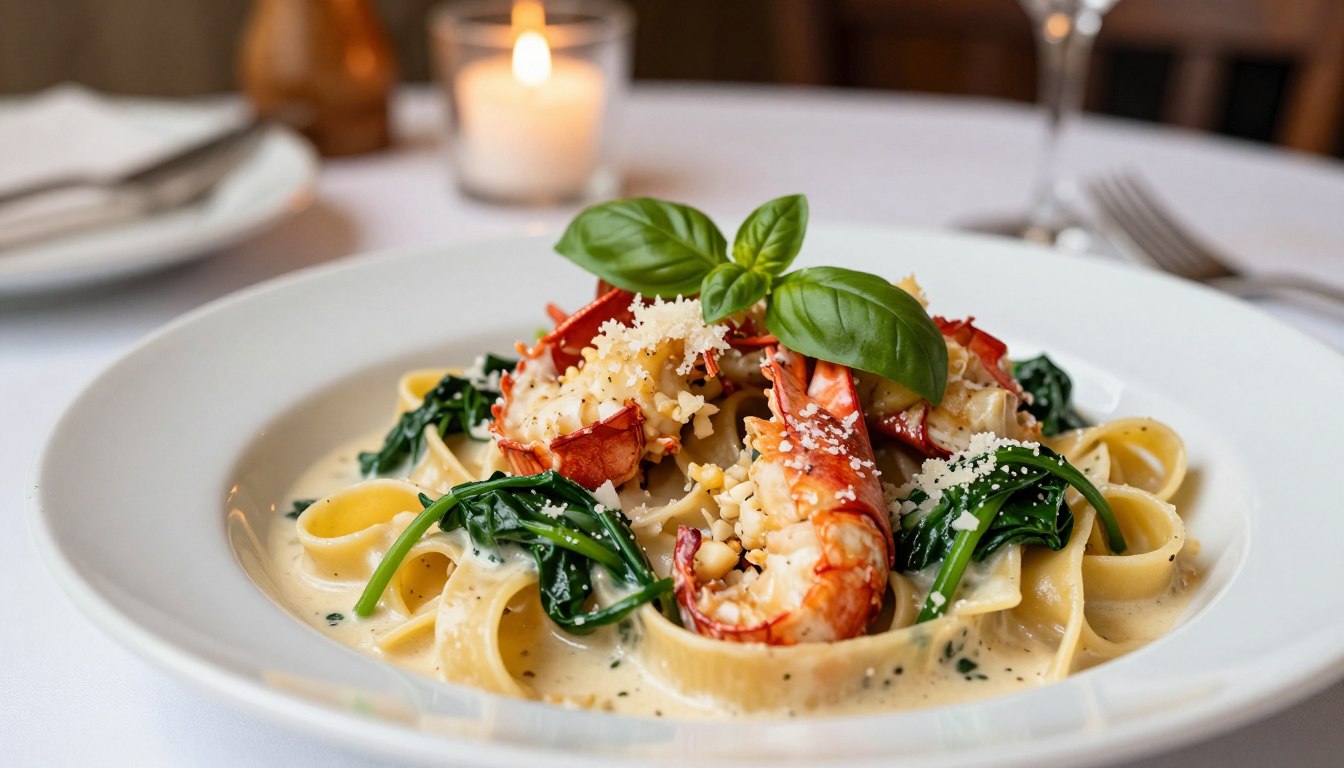
Luxurious Creamy Tuscan Lobster Pasta – Garlic Spinach Indulgence
Do you ever dream of a meal that feels like a celebration? A dinner that turns an ordinary evening into something truly memorable? We all have those moments where we crave a taste of pure luxury, right in our own kitchens.
This isn’t about complicated techniques or hours of prep. It’s about creating a stunning dish that feels special. Imagine tender, succulent lobster mingling with a rich, aromatic sauce. The goal is to bring that restaurant-quality experience home to your table.
This particular recipe is designed for exactly that. It captures the essence of a decadent pasta creation without the fuss. The combination of flavors is meant to be an indulgence, a treat you absolutely deserve.
Whether it’s a quiet date night or a festive gathering, this meal is your secret weapon. You can achieve incredible flavor and impressive presentation, proving that a spectacular dinner is well within your reach. Get ready to create something amazing.
Overview & Inspiration
Imagine transforming simple ingredients into a spectacular meal that feels both rustic and refined. This approach captures the heart of what makes great food memorable: Creamy Tuscan Lobster Pasta
Background of Tuscan flavors
Tuscan cuisine celebrates simplicity above all else. It focuses on fresh, high-quality ingredients that speak for themselves.
The tradition honors rustic flavors that have captivated food lovers for generations. This recipe carries forward that beautiful philosophy.
Why you’ll love this recipe
You’ll appreciate how this dish saves precious time while delivering maximum flavor impact. The entire cooking process takes under 30 minutes.
What makes this preparation truly special is its versatility. It works equally well for family dinners or entertaining guests.
The combination creates a satisfying textural experience that keeps you coming back for more. This approach uses minimal steps with accessible ingredients.
Even beginner cooks can achieve impressive results. The recipe comes fully seasoned with a custom blend that complements the sweet seafood beautifully.
Ingredients and Equipment
Success in the kitchen starts with having quality items and the proper tools on hand. This ensures a smooth process and an outstanding final result. Let’s get everything organized before we begin cooking.

Essential Ingredients List
Using fresh, high-quality components makes a significant difference in flavor. Here is your complete shopping list for this luxurious dish.
| Ingredient Category | Specific Item & Quantity | Key Notes & Substitutions |
|---|---|---|
| Pasta Foundation | 14-16 oz Tagliatelle or Fettuccine | Choose organic brands for best texture. Ribbon shapes hold sauce well. |
| Star Protein | 4-6 wild lobster tails (6 oz each) | More affordable than whole lobster. Shrimp is a great budget swap. |
| Sauce Base | 1¼ cups heavy cream, ½ cup stock, ½ cup parmesan cheese | Full-fat cream recommended. Cheese provides primary creaminess. |
| Aromatics & Flavor | 4 garlic cloves, sun-dried tomatoes, tomato paste, olive oil | Builds a deep, rich flavor foundation. Use fresh garlic. |
| Seasoning & Enhancers | Tuscan blend, white wine, lemon juice, kale, sea salt | Balances the dish. Use dry white wine and fresh lemon. |
Must-Have Kitchen Tools
Having the right equipment simplifies preparation. You likely have most of these items already.
An oven-safe skillet is crucial for baking the protein. Kitchen shears make cutting shells easy. A large pot is needed for boiling your noodles.
Tongs help with tossing and serving. A sharp knife and cutting board are essential for prepping your garlic and other ingredients efficiently.
Preparing the Lobster Tails
Proper preparation of your seafood is the secret to achieving restaurant-quality results at home. Taking time with this step ensures your main ingredient cooks evenly and stays tender.
Step-by-Step Lobster Prep
Start by preheating your oven to 400°F. Lightly grease an oven-safe skillet to prevent sticking.
Use kitchen shears to cut down the middle of each shell from top to bottom. Gently crack the shell and remove most of the lobster meat without detaching it completely. This technique allows even cooking while maintaining beautiful presentation.
Inspect the meat and remove any grey lining. Rinse each tail with water and a bit of vinegar, then pat dry thoroughly.
Tips for Perfectly Cooked Lobster
Slightly detaching the meat from the shell allows heat to circulate evenly. Brush generously with melted butter mixed with salt and seasoning.
Bake for 10-15 minutes, watching carefully. The lobster is done when it turns light pink throughout. Internal temperature should reach 140°F.
Avoid overcooking, which makes the texture tough. Remember, it continues cooking slightly after removal from heat. If boiling, use an ice water bath to stop the cooking process immediately.
Let cool for a few minutes before removing from shells. Cut into chunks or leave whole for dramatic presentation.
Cooking the Pasta to Perfection
Getting your noodles just right is a key step for a fantastic final dish. The right choice and technique make all the difference in texture and sauce absorption.
Tagliatelle is the ideal choice for this pasta recipe. Its name comes from the Italian “tagliare,” meaning to cut. These long, flat ribbons are perfect for holding a rich sauce.
Fresh versions cook in just a few minutes, while dried takes a bit longer. Always aim for an al dente texture.
Recommended Pasta Types and Substitutions
If you can’t find Tagliatelle, don’t worry. Several other types work wonderfully. The goal is to choose a shape that complements the sauce.
Ribbon-style pastas are your best bet. They have a similar texture and surface area. This helps the sauce cling to every strand.
| Pasta Type | Best For | Cooking Time Notes |
|---|---|---|
| Tagliatelle | Ideal choice, holds sauce beautifully | 7-10 minutes for dried; 3-4 for fresh |
| Fettuccine | Excellent substitute, very similar | Follow package directions for al dente |
| Linguine | Good alternative, slightly thinner | Cook about 1 minute less than directed |
| Penne/Rigatoni | Catches sauce in its ridges | Stir frequently to prevent sticking |
Start with a large pot of cold water. Bring it to a rolling boil before adding your pasta. Salt the water generously for flavor.
Stir after the first few minutes of cooking. This prevents the noodles from sticking together. Check the time on your package, but reduce it by 2-3 minutes.
The pasta will finish cooking when mixed with the hot sauce. This prevents a mushy texture. Save a cup of the starchy water before draining.
This pasta recipe is flexible. Using a high-quality store-bought fresh pasta is worth a bit extra for a special meal. It absorbs the sauce superbly.
Creating the Creamy Sauce
Building a rich, flavorful foundation is what transforms good ingredients into an extraordinary meal. The sauce serves as the unifying element that brings everything together in perfect harmony.
Sautéing Garlic and Sun-Dried Tomatoes
Begin by heating olive oil in your skillet over medium-high heat. Add minced garlic cloves and sauté for about 30 seconds until fragrant. Be careful not to brown the garlic as this can create bitter flavors.
Next, incorporate chopped sun-dried tomatoes and continue cooking for 1-2 minutes. They will become translucent and release their concentrated sweetness. Season with salt and your Tuscan blend at this stage.
Enhancing the Sauce with Wine and Lemon
Reduce the heat to medium-low before slowly adding your liquid ingredients. Pour in heavy cream, stock, white wine, and lemon juice while stirring constantly. This creates a smooth base for your sauce.
Allow the mixture to gently bubble for 1-2 minutes. Then whisk in grated parmesan cheese until fully melted and the sauce thickens beautifully. The cheese adds wonderful richness to the final creation.
For an extra flavor boost, consider adding butter and fresh lemon zest at the end. Remember to adjust your cream quantity based on whether you’re using fresh or dried noodles.
Perfecting Creamy Tuscan Lobster Pasta
This is the exciting moment when your preparation pays off in a stunning final creation. All your careful work comes together in one beautiful dish that’s ready to impress.

Combining Pasta, Lobster, and Sauce
Once your noodles reach perfect al dente texture, drain them thoroughly. Remember to save at least one cup of that precious starchy water. Immediately add the hot pasta to your waiting sauce.
Using tongs, gently toss for about two minutes. Ensure every strand gets completely coated with the luxurious mixture. The residual heat helps the sauce cling beautifully.
Now you have a choice for presentation. You can mix the succulent seafood chunks directly into the dish. Alternatively, arrange the noodles on plates and artfully top with the protein.
Taste your creation and adjust seasoning as needed. Add salt and pepper carefully since the cheese and tomatoes contribute saltiness. If the mixture seems too thick, gradually stir in reserved water or extra dairy.
The key to this pasta recipe is working quickly once everything is cooked. Serve immediately while the noodles are hot and the sauce is silky. For maximum flavor impact, distribute the meat evenly throughout.
Finish with optional garnishes like fresh lemon zest for brightness. A squeeze of citrus juice adds acidity. Chopped chives provide color and mild onion flavor. Red pepper flakes offer subtle heat, and extra cheese never hurts.
Variations and Dietary Alternatives
This versatile preparation welcomes countless variations that maintain its luxurious character. You can easily adapt it to suit different tastes or dietary needs.
Seafood Substitutions and Additions
Large shrimp make an excellent swap for lobster in this recipe. They offer similar texture at a more budget-friendly price.
For extra indulgence, add bay scallops or lump crab meat. These additions introduce wonderful layers of flavor. Clams also work beautifully when steamed directly in the sauce.
Dairy-Free Modifications
Creating a dairy-free version is surprisingly simple. Use vegan butter and full-fat coconut milk instead of traditional dairy.
Swap parmesan cheese with nutritional yeast or dairy-free shreds. The garlic and seasonings mask any coconut flavor perfectly.
| Variation Type | Best Substitutions | Flavor Impact |
|---|---|---|
| Seafood Alternatives | Shrimp, scallops, crab, salmon | Maintains rich seafood character |
| Meat Options | Chicken, steak, mushrooms | Creates hearty, satisfying dish |
| Dairy-Free | Coconut milk, vegan cheese | Preserves creamy texture |
| Lower Fat | Reduce cream, add vegetables | Lighter but still flavorful |
Fresh basil adds a bright, aromatic finish to any variation. Vegetable stock keeps plant-based versions authentic.
This recipe truly shines through its adaptability. Each modification creates a unique dining experience while preserving the dish’s essential appeal.
Serving Suggestions & Leftover Tips
How you serve and store your creation impacts both immediate enjoyment and future meals. These final touches ensure your hard work pays off completely.
Plating Ideas and Garnishes
Choose your presentation style based on the occasion. For casual family dinners, serve in a large bowl where everyone can help themselves.
For special date nights, plate individual portions with seafood artfully arranged on top. Pair your meal with a crisp side salad for extra vitamins.
Fresh basil and a squeeze of lemon juice add brightness to each plate. A sprinkle of red pepper flakes offers optional heat.

Storing and Reheating Guidelines
Let your pasta cool to room temperature before storing. Use an airtight container to keep it fresh in the refrigerator for 3-4 days.
Reheat gently in your skillet with a bit of olive oil. Add a splash of cream if needed to restore the sauce’s texture.
For longer storage, freeze in a freezer-safe container for up to 3 months. Always inspect leftovers before enjoying them.
Conclusion
With this comprehensive guide, you’re equipped to impress guests and treat yourself to gourmet dining at home. You now have everything needed to create this spectacular recipe that transforms simple ingredients into an unforgettable experience.
This pasta recipe proves restaurant-quality meals don’t require hours of time or professional training. The techniques make cooking with lobster approachable and rewarding.
The key to success lies in timing your preparation. Work efficiently when combining components for optimal texture and flavor. Serve immediately for the best experience.
This versatile dish adapts beautifully to your preferences while maintaining its luxurious character. It works for any occasion from busy weeknights to special celebrations.
Now it’s time to gather your ingredients and create this incredible dinner. Share your beautiful results and inspire others to try these amazing recipes!
FAQ
Can I use a different type of seafood in this dish?
Absolutely! This recipe is very flexible. You can easily substitute the lobster meat with large shrimp, scallops, or even chunks of firm white fish like cod or halibut. The cooking time might vary slightly, so just make sure your chosen seafood is cooked through before adding it to the sauce.
What’s the best way to store leftovers, and how long will they keep?
Let the pasta cool completely before transferring it to an airtight container. It will stay fresh in the refrigerator for up to 3 days. The sauce may thicken, so add a splash of stock or water when reheating gently on the stovetop. We don’t recommend freezing this dish, as the dairy can separate.
I don’t have white wine. What can I use instead?
No problem! You can replace the wine with an equal amount of chicken or vegetable stock. For a bit of acidity that mimics the wine, you can add an extra teaspoon of fresh lemon juice to the sauce. The flavor will still be rich and delicious.
How can I make this recipe dairy-free?
You can create a luxurious dairy-free version by using full-fat coconut milk in place of the heavy cream. Use a vegan butter alternative and nutritional yeast or your favorite vegan parmesan for that cheesy flavor. The result is just as creamy and satisfying.
What kind of pasta works best with this sauce?
We love using long pasta like linguine or fettuccine because the ribbons hold the creamy sauce so well. Short pasta shapes like rigatoni or penne are also excellent choices, as their nooks and crannies trap the sauce and bits of tomato and garlic.
Can I prepare any parts of this recipe ahead of time?
Yes, you can get a head start! You can cook the lobster tails and shred the meat a few hours in advance. You can also measure out all your ingredients (mince the garlic, chop the basil) so that when it’s time to cook, everything comes together quickly and smoothly.