
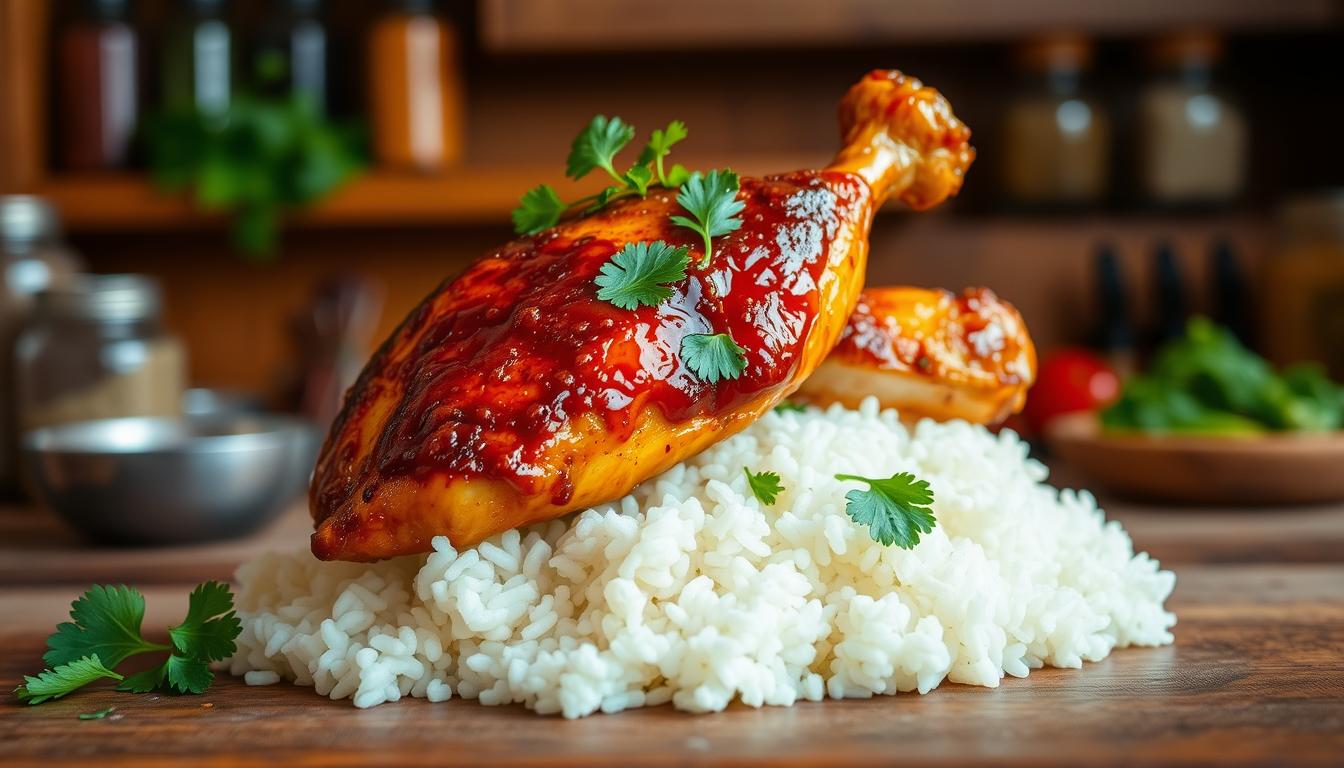
Easy Chipotle Honey Chicken Recipe for Flavorful Meals
Ever crave that perfect balance of sweet and smoky in your weeknight dinners? Imagine transforming basic ingredients into something that makes your taste buds dance – without spending hours in the kitchen. That’s exactly what this guide delivers.
You’ll master a technique that locks in tenderness while creating a caramelized crust. The secret? Reserving part of your marinade to toss with the cooked protein. This creates that glossy, restaurant-worthy finish you love, but with better flavor control than any takeout order.
Whether you’re building burrito bowls or stuffing quesadillas, this method adapts effortlessly. Adjust the heat to match your mood – keep it mild for family dinners or turn up the spice for date night. No special equipment needed – a skillet works just as well as a grill.
What makes this approach stand out? You decide how bold the smoky notes play against the golden sweetness. It’s the kind of meal that disappears fast, leaving everyone asking, “When are we having this again?”
Introduction to a Flavorful Chicken Experience
What transforms ordinary meals into memorable ones? It’s the dance between bold contrasts – fiery heat softened by golden sweetness, smoky depth brightened with citrus zing. This dish delivers that magic through smart ingredient pairing.
Discovering the Sweet and Spicy Balance
The marinade’s genius lies in its simplicity. Smoky peppers meet floral sweetness, while lime adds freshness to cut through richness. As chef Carla Martínez notes:
“True balance isn’t about equal parts – it’s about layers that surprise then satisfy.”
Your taste buds get heat first, then sweetness, finishing with subtle tang. This progression keeps every bite interesting. Adjust ratios easily – add extra peppers for adventure or boost honey for family-friendly meals.
What Makes This Method Stand Out
Restaurant versions often overpower with sugar. Homemade cooking flips the script:
| Feature | Homemade | Restaurant |
|---|---|---|
| Spice Control | Adjustable heat | Fixed intensity |
| Ingredient Quality | Fresh citrus, raw honey | Pre-made mixes |
| Versatility | Works in tacos, salads, bowls | Single-use prep |
Marinating time matters most. Thirty minutes minimum lets flavors penetrate deeply. For deeper infusion? Chill overnight – the acid tenderizes while spices mellow.
Pair this protein with charred veggies for weeknight dinners or shred into soft tortillas for weekend feasts. It adapts to your cravings while delivering consistent, juicy results.
Essential Ingredients and Marinade Preparation
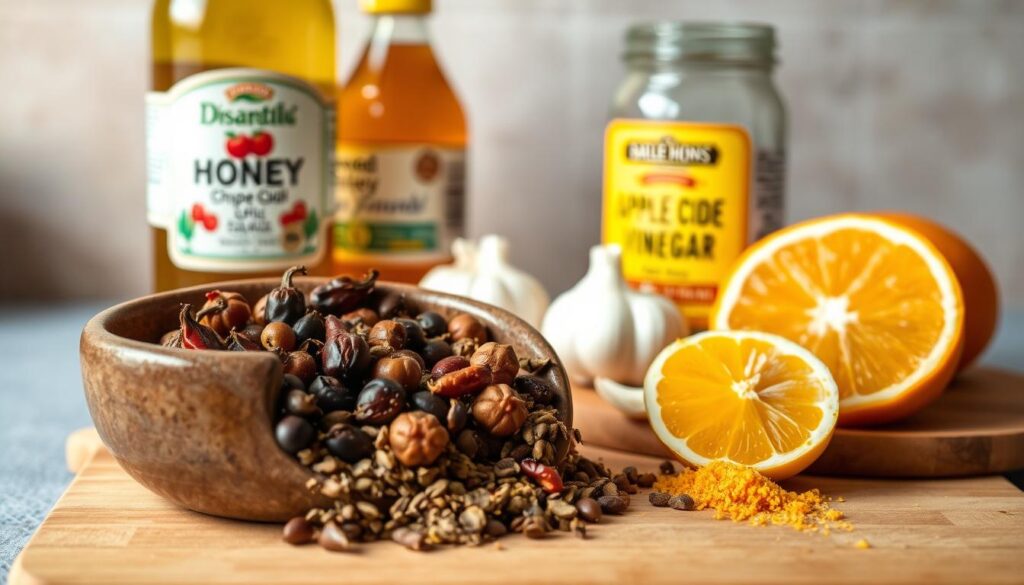
Great meals start with smart ingredient choices. The right components work like puzzle pieces – each enhancing the others to create a cohesive flavor profile. Let’s break down what you’ll need and how to combine them effectively.
Key Ingredients You’ll Need
Boneless skinless thighs are your foundation. Their higher fat content keeps meat juicy during cooking, especially when paired with bold flavors. Look for 1.5 pounds of evenly sized pieces for consistent results.
Canned chipotles in adobo bring smoky depth. Start with 2 tablespoons of minced peppers (seeds removed for milder heat). Can’t find them? Ground chipotle powder works – use 1 teaspoon per tablespoon of fresh peppers.
Building a Flavorful Marinade With Chipotle & Honey
Mash peppers into a paste using a fork. Whisk with ¼ cup avocado oil – its high smoke point prevents burning. Add 3 minced garlic cloves and 2 tablespoons raw honey. The sweetener caramelizes beautifully while balancing heat.
Acid matters: 2 tablespoons lime juice tenderizes without overpowering. Finish with smoked paprika (½ teaspoon) and cumin (1 teaspoon). Stir until emulsified – the mixture should coat a spoon thickly.
Marinate thighs for at least 30 minutes. For deeper flavor penetration? Refrigerate overnight. The oil acts as a carrier, ensuring every bite gets infused with smoky-sweet goodness.
Mastering Your Chipotle Honey Chicken Recipe

Perfecting your marinade transforms good dishes into unforgettable ones. Focus on three pillars: timing precision, food-safe practices, and thorough flavor infusion. These elements work together to create tender, vibrant results every time.
Tips for Marinating to Perfection
Timing makes all the difference. Thirty minutes gives surface flavor, while 12-24 hours lets spices penetrate deeply. The acid in lime juice tenderizes fibers gradually, so longer waits yield softer textures.
Always reserve 2 tablespoons of marinade before adding protein. This ensures a safe finishing sauce. Never reuse liquid that touched raw meat – food safety matters as much as taste.
Crush peppers with spices using a spoon’s back to form a paste. No blender needed. Whisk in oils and citrus – this emulsion clings better than watery mixtures. Thicker consistency means richer coating.
Flip pieces halfway through marinating. All sides get equal love. For uneven cuts? Place smaller pieces on top during refrigeration so gravity helps distribute flavors.
Oil carries fat-soluble flavors into meat, while acids break down tough fibers. Time lets them collaborate. Too thick? Add a splash of citrus. Too thin? Mix in extra spices.
Match prep to your schedule. Short on time? Use shallow dishes for faster absorption. Planning ahead? Layer flavors overnight for depth that wows.
Marinating and Prepping Your Chicken
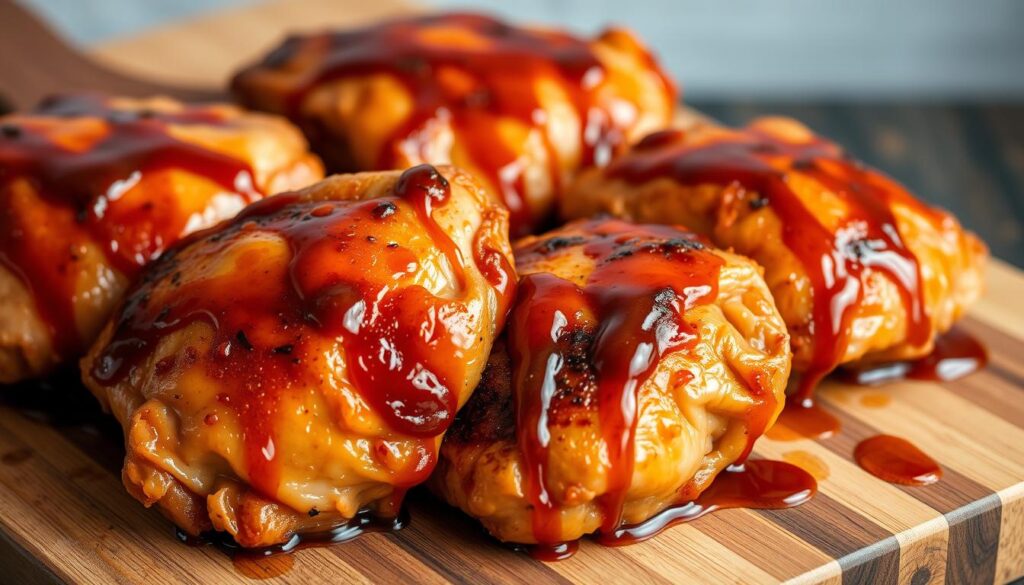
Proper preparation transforms simple ingredients into restaurant-quality results. Your protein choice and marinating strategy directly impact texture and flavor absorption. Let’s explore how to set yourself up for success.
Choosing the Right Chicken Cuts
Thighs outperform breasts in this application. Their higher fat content prevents drying during high-heat cooking. For leaner options:
- Slice breasts into ¾-inch strips
- Pound uneven pieces to uniform thickness
- Use the criss-cut technique: diagonal scores ¾ deep
These methods increase surface area for marinade absorption while maintaining structural integrity. Skinless varieties work best for even coating.
Time and Temperature Considerations
Marinating duration affects flavor depth:
| Time | Result |
|---|---|
| 30 minutes | Surface seasoning |
| 4-6 hours | Moderate penetration |
| 24 hours | Full flavor infusion |
Always refrigerate during extended marinating. Oil-based mixtures cling better when chilled. For food safety, discard used marinade and apply fresh glaze after cooking.
Cooking Techniques: Grilling, Skillet, and More
Your cooking method shapes both flavor and texture. Whether you crave charred edges or sticky-sweet glazes, these techniques deliver professional results with home kitchen ease.
Grilling for That Smoky Flavor
Preheat your grill to medium-high heat – about 400°F works best. Pat thighs dry with paper towels to prevent flare-ups. Grill 5-7 minutes per side, brushing with reserved marinade during the last 2 minutes. This creates caramelization without burning the honey.
For crosshatch marks, rotate pieces 45° halfway through cooking. Let rest 5 minutes before slicing. The carryover heat finishes cooking while keeping juices locked in.
Skillet Methods for a Delicious Glaze
Cast iron skillets excel here. Heat 1 tablespoon oil over medium until shimmering. Cook thighs 4-5 minutes undisturbed to develop crust. Flip, reduce heat to medium-low, and cook 8-10 minutes covered.
Uncover, pour in reserved marinade, and simmer 2 minutes. The liquid reduces into a glossy coating. For breasts, slice cooked meat thin and toss in the glaze – this prevents dryness while maximizing flavor.